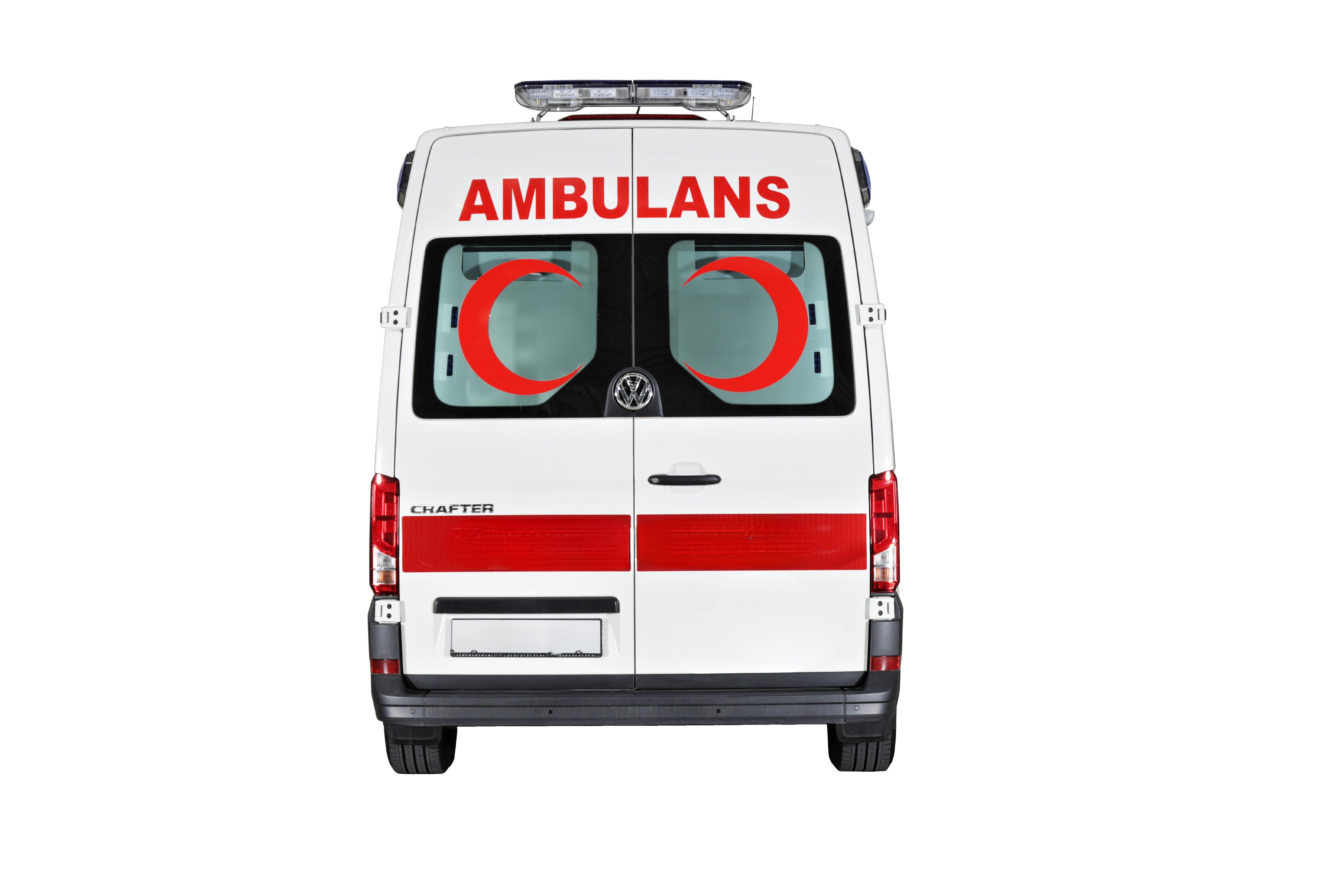
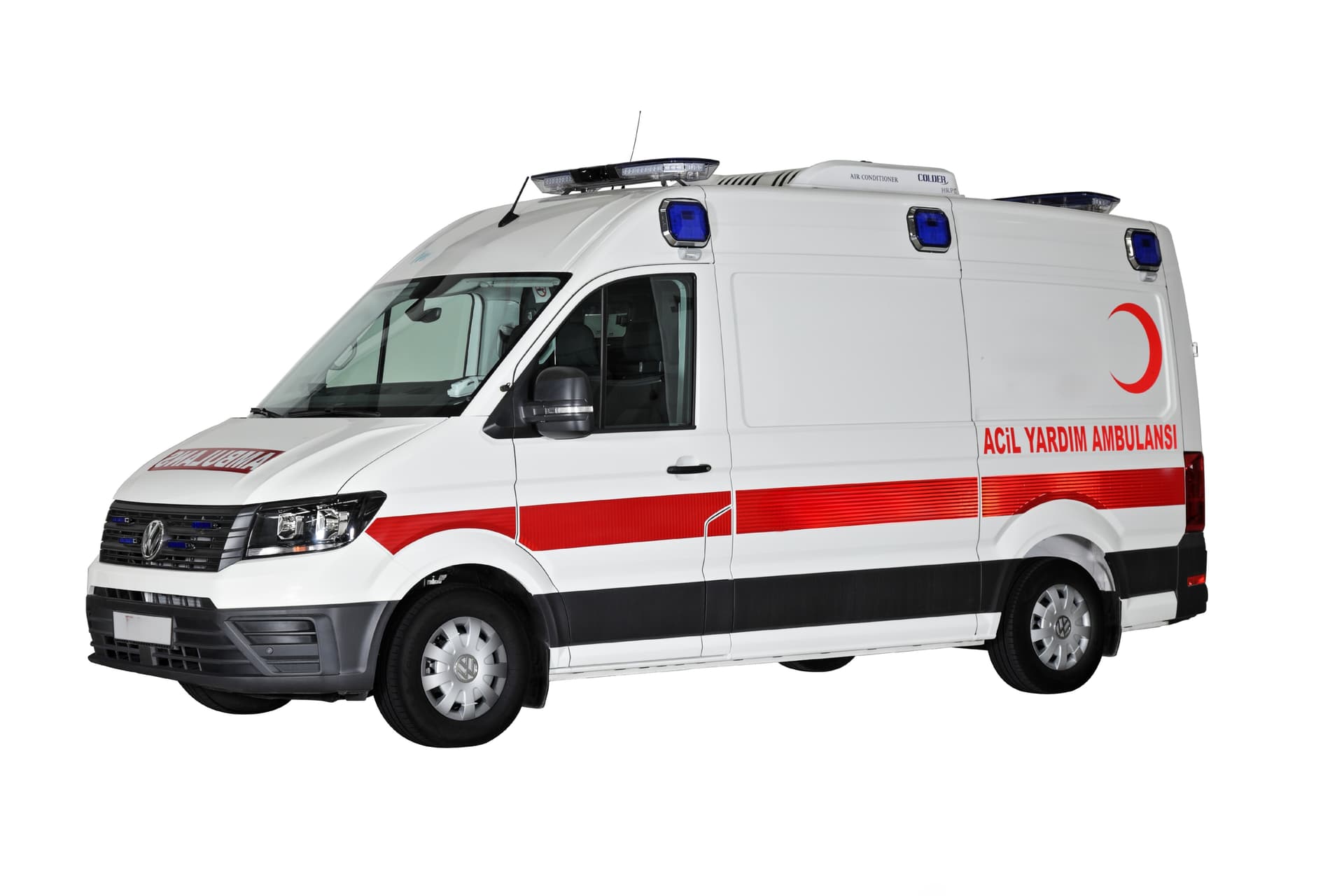
Volkswagen Crafter Ambulance
Europe's most spacious van ambulance platform — Crafter CR35/CR50 L4H3 with 4,300 mm cargo length, 1,832 mm internal width, and 2.0L TDI diesel up to 177 HP. CR50 (5-tonne GVW) absorbs full Type B conversion weight without overloading.
The Volkswagen Crafter (CR35 / CR50) L4H3 or L4H4 configuration is the benchmark for high-specification European van ambulance programs. Its 4,300 mm load length and 1,832 mm internal width provide one of the most generous patient compartment footprints in the van ambulance segment. The L4H4 super-high roof achieves 2,089 mm internal height — genuine full standing height for two clinical staff simultaneously. The CR50 (5,000 kg GVWR) variant is critical for Type B and Type C conversion: it absorbs the full weight of ambulance conversion, medical equipment, crew, and patient without approaching the GVW limit that affects lighter CR35 builds. Available with 2.0L TDI in 102–177 HP outputs, FWD, RWD, or 4MOTION AWD. Standard on German, Austrian, and Dutch EMS services, and preferred by institutional buyers requiring EN 1789 compliance with maximum clinical workspace.
- Platform
- Volkswagen Crafter
- Ambulance Type
- Type B Emergency Ambulance
- Category
- Van Ambulance
EN 1789 Certification
Type B Emergency Ambulance — High-Roof / Super-High-Roof Configuration
- EN 1789 Type B: 4,300 mm × 1,832 mm patient compartment footprint — exceeds standard Type B spatial requirements
- L4H4 (2,089 mm internal height): full standing height for two clinical staff — one of the most clinically effective van configurations
- CR50 (5,000 kg GVWR): full Type B conversion weight absorbed without reaching GVWR limit — critical for ALS equipment loadout
- Standard on German and Austrian EMS services — the benchmark European van ambulance for EN 1789 compliance
Key Configuration Features
- •L4H3 interior: 4,300 mm × 1,832 mm × 1,861 mm — largest standard van ambulance compartment
- •L4H4 super-high roof: 2,089 mm internal height — genuine full standing height for two staff simultaneously
- •CR50 (5,000 kg GVWR): absorbs full Type B/C conversion weight without payload overload
- •2.0L TDI diesel — 102/140/177 HP options; FWD, RWD, or 4MOTION AWD
- •MAN-engineered architecture — VW Group build quality, broad European parts supply
- •Advanced active safety as standard: lane-keep, AEB, adaptive cruise (Gen 2 Crafter)
Typical Use Cases
- •Urban and regional EMS — German, Austrian, Dutch, and Central European ambulance services
- •Hospital inter-facility transfer fleets requiring maximum clinical workspace
- •Government and institutional Type B/C fleet procurement
- •Export buyers specifying European-standard high-roof van ambulance configuration
- •High-volume programs requiring repeatable EN 1789-compliant deliveries
Equipment & Interior Scope
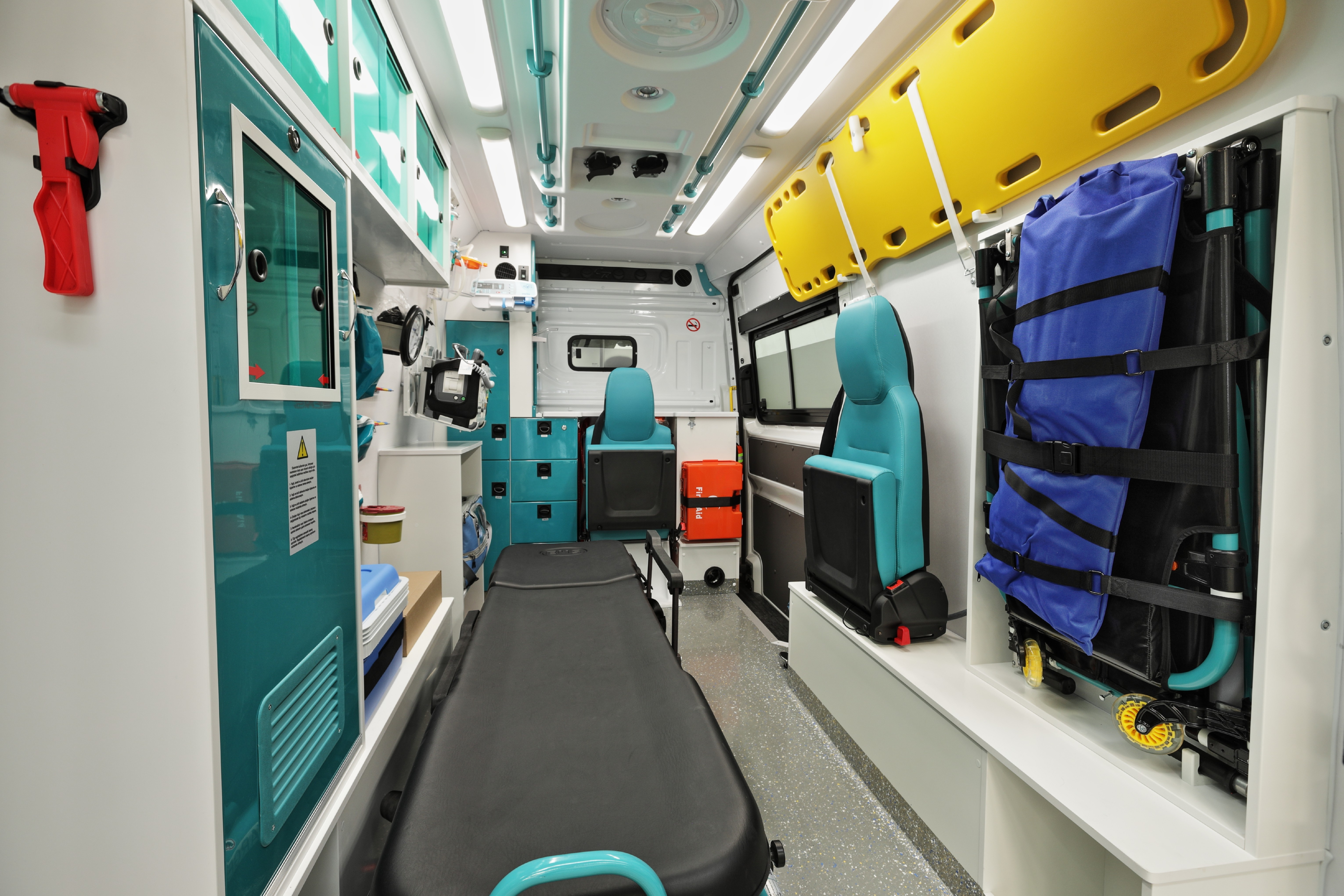
- •EN 1789-specification main stretcher — side and rear loading; powered stretcher option
- •2 attendant positions with 3-point restraint — full standing-height clinical workspace
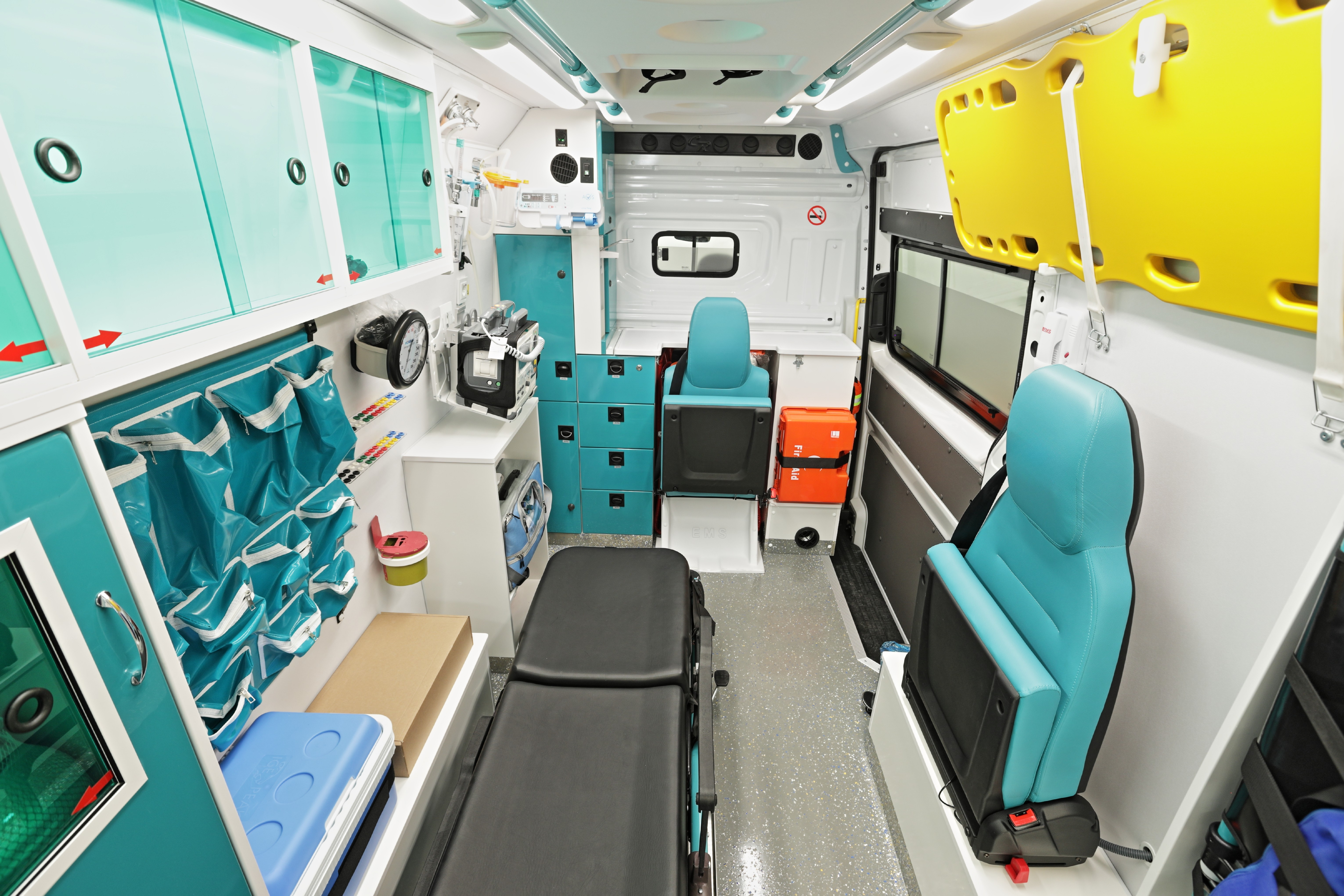
- •Modular medical cabinetry — 4,300 mm load length provides maximum storage layout
- •Oxygen system: 4-outlet pipeline, suction, patient zone and crew zone provisions
- •LED emergency light bar, dual-tone siren, 12V/220V control panel, ALS provisions
Configuration Reference
Patient Compartment & Equipment Scope
Reference data for procurement planning. Final dimensions, equipment layout, and clinical configuration are confirmed during Ramsbulance project specification according to operator requirements and destination-market standards.
Patient Compartment Reference
- Working Height (L4H3)
- 1,861 mm internal (RWD) — operational near-standing height for attending crew
- Working Height (L4H4)
- 2,089 mm internal — full standing height; simultaneous two-staff clinical workspace
- Internal Width
- 1,832 mm usable width — L4 wheelbase variants
- Load Length
- 4,300 mm OEM load length (L4) — 3,450 mm on L3; post-conversion patient zone ~3,000–3,500 mm
- Floor Area
- ~7.5–7.9 m² patient compartment floor (L4 body) — ample ALS and MICU equipment layout
- Loading Access
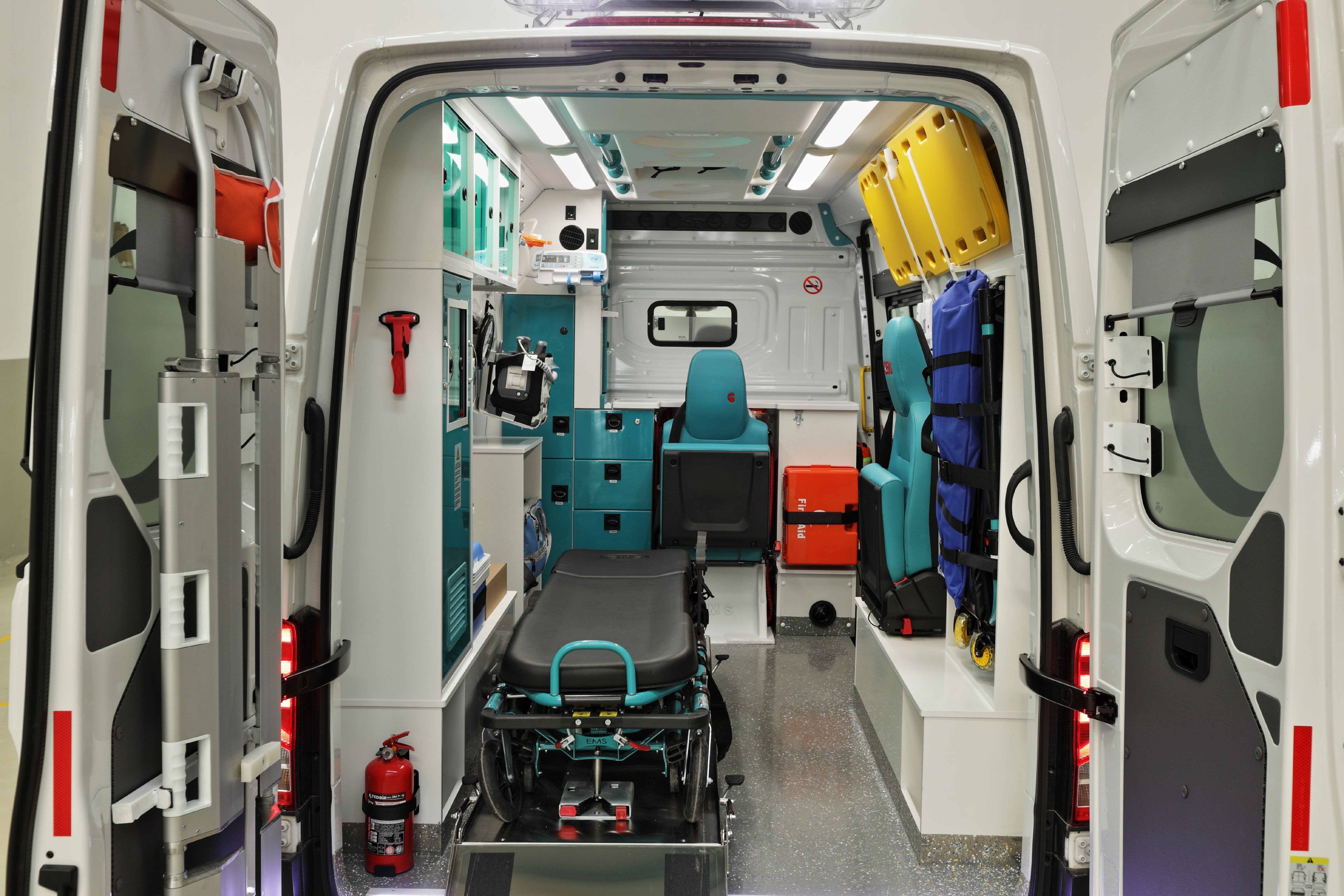
- Rear loading with powered/ramp stretcher; side door attendant and lateral patient access
- Stretcher Positions
- 1 main EN 1789-compliant stretcher; second stretcher or incubator in CR50/Type C variants
- Attendant Seats
- 2 attendant positions with 3-point restraint — crash-tested folding mount
- Oxygen Outlets
- 4-outlet medical gas pipeline — patient zone + crew zone supply and suction provisions
- Electrical System
- 12V vehicle / 220–230V shore power — ambulance dual-power architecture; AWD-compatible
Standard Equipment Scope
- EN 1789-specification main stretcher and powered loading system
- Ambulance electrical control panel — 12V / 220V dual supply with circuit protection
- LED emergency lighting bar and dual-tone audible warning system
- 4-outlet oxygen pipeline and suction system
- Modular medical cabinetry — secure-latch storage and clinical workspace
- Antibacterial seamless easy-clean interior surface system
- Full LED interior illumination — white and red mode
- 2 attendant seats with 3-point crash-tested restraint
- EN 1789-compliant equipment restraint and medical device mounting
Optional Additions
- Second stretcher or incubator mounting configuration
- Advanced life support equipment integration
- Patient compartment HVAC climate control system
- Auxiliary or shore power backup system
- Livery, graphics, and destination-market branding package
- GPS tracking and communication system integration
- Destination-market specific certification (GOST-R, CE, or other on request)
Procurement Reference
Technical Specification Snapshot
Exact dimensions, payload, electrical architecture and medical equipment scope are confirmed during project specification. Ramsbulance can provide technical drawings, specification files and certification documents for qualified procurement review.
Technical Reference
- Base Platform
- Volkswagen Crafter CR35 (3.5t) or CR50 (5.0t) — L4H3 or L4H4 configuration
- Engine
- 2.0L TDI diesel — 75 kW / 102 HP, 103 kW / 140 HP, or 130 kW / 177 HP; torque 250–410 Nm
- Transmission
- 6-speed manual or 8-speed automatic; FWD, RWD, or 4MOTION AWD
- GVWR
- CR35: 3,500 kg / CR50: 5,000 kg — CR50 recommended for full Type B/C ambulance conversion
- Ambulance Type
- EN 1789 Type B; Type C in CR50 — confirmed at project specification
- Patient Compartment
- L4H3: 4,300 mm × 1,832 mm × 1,861 mm / L4H4: 4,300 mm × 1,832 mm × 2,089 mm
- Electrical System
- 12V vehicle / 220–230V shore power — compatible with AWD configuration
- Safety (Gen 2)
- AEB, lane-keep assist, adaptive cruise control — standard on current production
Procurement Notes
- Order Size
- Confirmed during quotation according to model, configuration and destination market.
- Production Schedule
- Typical production is 8–16 weeks from confirmed specification, depending on configuration and quantity. Confirmed after technical specification, equipment scope and documentation review.
- Spec Sheet
- Technical specification sheet and drawings available for qualified procurement enquiries.
- Buyer Information Needed
- Country, quantity, intended use, vehicle platform and equipment level.
Base Chassis Reference
OEM chassis data is shown as a reference for procurement review. Final ambulance dimensions, weight, payload, electrical architecture, and equipment scope are confirmed during Ramsbulance project specification.
- Base Chassis
- Volkswagen Crafter CR35 (3,500 kg) or CR50 (5,000 kg) — van ambulance platform
- Wheelbase
- L3: 3,640 mm / L4: 4,490 mm — L4 preferred for EN 1789 patient compartment length
- Exterior (L4H3)
- 6,836 mm × 2,040 mm × 2,590 mm (L × W × H)
- Exterior (L3H3)
- 5,986 mm × 2,040 mm × 2,590 mm (L × W × H)
- Interior (L4H3)
- 4,300 mm L × 1,832 mm W × 1,861 mm H (RWD)
- Interior (L4H4)
- 4,300 mm L × 1,832 mm W × 2,089 mm H — super-high roof
- GVWR
- CR35: 3,000–3,500 kg / CR50: 5,000 kg — payload CR50 up to ~2,200 kg
- Engine
- 2.0L TDI diesel — 75/103/130 kW options; 250–410 Nm torque range
- Drivetrain
- FWD / RWD / 4MOTION AWD — market-dependent availability
Base chassis data is provided as an OEM reference. Actual variant, wheelbase, dimensions, payload, equipment weight, and destination-market specification are confirmed during Ramsbulance project review. Final ambulance conversion values depend on selected chassis, medical equipment scope, interior layout, and certification documentation.
Export Documentation Package
Standard documentation provided with each Ramsbulance delivery for international procurement, customs clearance, and institutional record-keeping.
- Vehicle manufacturer certificate of conformity
- EN 1789 certification documentation
- ISO 9001 and ISO 13485 quality certificates
- Technical drawings and confirmed layout specification
- Equipment list and conversion scope confirmation
- Operator and maintenance documentation package
- Customs and export compliance documentation
- Commercial invoice, packing list, and certificate of origin (on request)
Request the technical specification sheet, drawings and certification documents for this model during procurement review.
Interior Highlights
Interior configuration references for the Volkswagen Crafter Ambulance.